Can You Replant an Uprooted Tree?
April 1, 2026
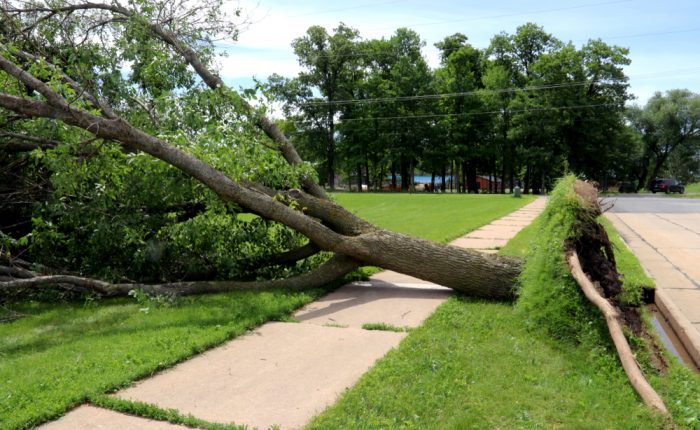
A storm keeps you up at night. And then morning arrives. You step onto the porch with a cup of coffee, and your stomach drops: the big shade tree that’s always stood tall is now leaning at an alarming angle. The root ball is lifted, the ground is torn up like a hinge, and the soil looks peeled back as if someone tried to pry the tree out of the earth. At this point, you’re likely thinking, “Can we save it?”
Sometimes, the answer is yes, as replanting an uprooted tree can be possible. But it isn’t a guaranteed fix, and it’s not just a matter of “push it back and hope.” Whether a tree can be replanted depends on key factors like tree size, species, root damage, how long it’s been uprooted, soil conditions, and the tree’s overall health.
Let’s take a closer look at how to evaluate an uprooted tree to determine if replanting can work or if removal is a safer option.
What an “Uprooted Tree” Really Means
When people say a tree is “uprooted,” they’re often describing a few different situations. Understanding the difference matters because the type of failure tells you a lot about whether the tree has a realistic chance of recovery.
Leaning vs. Root Plate Heave
- A Leaning Tree: The trunk is angled, but the tree may still be mostly anchored. Sometimes, the lean is new after strong wind, but the roots haven’t fully lifted.
- Root Plate Heave: You can visibly see the root plate (the main root mass) lifting, with soil raised on one side and sinking on the other. This is the classic “hinge” look — like the tree is opening the ground.
Partially Toppled vs. Fully Down
- Partially Toppled: The tree is still upright-ish, but clearly unstable. Roots may be torn or exposed, and the tree may continue moving in the wind.
- Fully Down: The tree is on the ground, the root system is exposed, and the trunk may be twisted, cracked, or strained from the fall.
Please note that a tree doesn’t have to be completely flat to be dangerous. In fact, partially uprooted trees can be some of the most unpredictable, because the root plate may still be under tension, ready to shift further with the next gust or heavy rain.
Key Factors That Determine if a Tree Can Be Replanted
Here’s the honest truth: replanting isn’t determined by one single “yes/no” rule. It’s a combination of practical physics and tree biology. This is why certified arborists look at a range of factors when determining if an uprooted tree can be replanted.
Size, Height, and Weight
The bigger the tree, the harder it is to save — period.
Small trees can often be reset, staked, and monitored. Even medium trees might be candidates for replanting if the roots are mostly intact and the site conditions are good.
Large trees, however, are rarely good candidates because the forces involved are enormous. Even if you could stand it back up, the damaged roots may not anchor it well enough to keep it safe long-term.
Age and Vigor
Two trees of the same size might have very different odds of survival after replanting, depending on overall health.
For example, a tree that was thriving (had a full canopy, strong growth, and no major diseases) may rebound better. A tree that was already stressed (with fungal issues, dead limbs, a thin canopy, or decay) may not have enough energy reserves to recover after root loss.
Species and Rooting Habits
Different species behave differently in storms. In fact, some trees have deep, strong root systems and are less likely to uproot unless soils are extremely saturated. Others tend to be shallow-rooted, making them more prone to tipping. In other words, certain trees may not recover from replanting, even if they were healthy before the storm and soil conditions are favorable.
Percent of Roots Exposed or Torn
If only a smaller portion of the root plate is lifted and most roots remain in place, replanting may be possible.
If a large portion of the root system is torn, severed, or dangling, the tree has lost both water uptake capacity and anchoring power.
Professionals often look at it like this: the more “clean” the lift, the better the chance of survival after replanting. The more shredded and snapped the roots are, the worse the prognosis.
Trunk Cracks, Splits, and Twist Damage
Sometimes, the roots aren’t the only issue. Wind can torque the trunk like a lever and cause long vertical splits or deep cracks near the base. If the trunk is compromised, replanting may turn into a false sense of security.
Canopy Damage and Imbalance
When a tree tips, branches can snap, the crown can shift, and suddenly, the canopy weight is uneven. An unbalanced canopy pulls the tree further in one direction, makes stabilization harder, and increases the risk of failure during the next storm. While pruning may help here, it must be done carefully.
How Long It’s Been Uprooted
Time matters more than most people think. If the roots are exposed to sun and wind for too long, they dry out quickly. And the longer the tree sits tilted or down, the more the fine absorbing roots suffer.
Quick action gives the tree its best shot, especially for smaller trees.
Soil Saturation and Site Drainage
Storm damage often happens when soils are waterlogged. That same saturated soil can work against you during replanting:
- In soggy ground, roots may not grip well even after resetting.
- Poor drainage can lead to ongoing instability and root decline.
- Replanting into mud can sometimes create a “floating” root plate that never properly re-establishes.
If drainage is a chronic problem, saving the tree might require more than straightening; it may require addressing the site itself.
When Replanting Has the Best Chance of Success
Replanting tends to be most successful when several conditions line up:
- Small-to-Medium Trees: If the tree is still manageable in size (think: a tree you could realistically stabilize without heavy equipment), you’re already in a better spot.
- Minimal Root Damage: If the root ball lifted but remains largely intact, you may be able to reset it and help it recover.
- Quick Action: The sooner the tree is properly stood back up and stabilized, the better.
- A Healthy Tree to Begin With: A tree with good vigor has a better ability to regrow roots and recover from canopy stress.
When replanting makes sense, it’s still not a “set it and forget it” situation. It becomes a project, requiring stabilization, careful pruning, watering plans, and ongoing monitoring.
Signs the Uprooted Tree Should Be Removed Instead of Replanted
This is the part nobody loves, but it’s also the part that keeps families and property safe. Sometimes, removal isn’t about giving up on a tree. It’s about recognizing when the risk is too high.
Here are strong warning signs that tree removal is the safer choice:
- Major Trunk Splits or Cracks: If the trunk has split or shows deep cracking, the tree may be structurally unsafe even if it’s upright.
- Severe Root Loss: If a large percentage of roots are torn or exposed, the tree may not take up enough water to survive or anchor well enough to resist future winds.
- A Compromised Structure: If the tree now leans aggressively, has a shifted crown, or appears “sprung” in a twisted position, the forces on the trunk and remaining roots can be unpredictable.
- Proximity to Home, Driveway, or Walkways: When the target area is high-value (and high-risk), such as near a structure or driveway/walkway, professionals often recommend removal sooner rather than later.
What Professional Tree Stabilization Might Involve
If replanting is possible, stabilization is where professional help really matters. Common strategies may include:
Cabling and Bracing
Professionals may use:
- Cabling to reduce movement and redistribute forces in the canopy
- Bracing (hardware support) in certain structural situations
Pruning for Balance
Stabilization often includes selective pruning to:
- Reduce sail effect (wind resistance)
- Remove broken or hazardous limbs
- Balance canopy weight so the tree isn’t “pulling” in one direction
Aftercare and Monitoring
If a tree is replanted, aftercare can include:
- A structured watering plan (especially during dry periods)
- Mulching to support moisture retention
- Monitoring for dieback, pests, and decline
- Checking the stability of hardware and the soil settling over time
A replanted tree is essentially in rehab. It can recover, but it needs support.
Get Your Uprooted Tree Evaluated
If you’re dealing with a storm-damaged or uprooted tree, don’t guess about its condition. All The Above Tree Service proudly helps homeowners throughout Bucks County, PA, evaluate trees to determine the best care plans. Contact us today for a tree health inspection and honest recommendations, whether that means a plan to save your tree or the safest way to remove it and protect your property.