Rules for Tree Removal in Bristol, PA
January 6, 2026
You might assume removing a tree is as simple as firing up a chainsaw and getting to work. But in actuality, there’s usually a lot more that goes into it. Location matters. Property lines matter. HOA rules can absolutely matter. And depending on where the tree sits (and what municipality you’re in), local requirements can complicate the process even further. By understanding these tree rules and regulations in Bristol, PA (and the surrounding Bucks County municipalities), you can avoid fines, neighbor disputes, and unsafe removals.
Below, we’ll outline common tree removal permit and regulation considerations.
Why Tree Removal Rules Exist
Regulations on tree removals aren’t there to make your weekend harder — they exist because trees interact with public spaces and infrastructure in ways homeowners don’t always see until something goes wrong. Overall, this “red tape” keeps the community’s well-being at the forefront.
- Public Safety: A tree removal that goes sideways can injure people, damage vehicles, or create hazards that require emergency response. Municipalities care about this because unsafe work becomes a public problem quickly.
- Protecting Infrastructure: Trees near curbs and sidewalks can heave concrete, block sightlines, disrupt sewer lines, and interfere with snow removal. This is why many towns require permits to help manage how these public-facing trees are removed to prevent damage to the town’s infrastructure.
- Utility Clearance: In Bucks County, downed trees are a leading cause of power outages. Rules surrounding trees near power lines ensure that removals don’t result in widespread blackouts or electrical fires.
- Preserving the Community Tree Canopy: Trees provide shade, reduce energy costs, improve air quality, manage stormwater, and support wildlife. For this reason, many municipalities, including Bristol Borough, require homeowners to plant a replacement tree if they remove a healthy shade tree to ensure the town doesn’t lose its green space over time.
When You Might Need a Tree Removal Permit in Bristol, PA
First, an important note: “Bristol, PA” can refer to different municipalities (for example, Bristol Borough vs. Bristol Township), and permit requirements often differ. If you’re not sure which municipality you’re in, your address (and tax records) will usually clarify.
Bristol Borough Requirements
The Borough has a dedicated Shade Tree Commission that oversees trees, particularly those in the public right-of-way (the area between the sidewalk and the street). If you want to remove a tree in the right-of-way, you must obtain a permit. The Borough will typically inspect the tree first. If they grant permission for removal, you are often required to plant a replacement shade tree within six months.
Even on your own private lot, trees with a diameter at breast height (DBH) of 15 inches or greater often require a permit for removal. The Zoning Officer generally only issues these permits if the tree is dead, diseased, or poses a clear hazard.
Bristol Township Requirements
In the Township, the focus is often on large-scale land clearings or trees that affect public safety.
Similar to the Borough, if a tree is located between the curb and the sidewalk, a permit is typically required.
If you are clearing multiple trees or performing a forestry activity on a larger lot, you may need a zoning permit to ensure you aren’t violating natural resource protection standards (like those protecting steep slopes or floodplains).
Property Lines, Shared Trees, and Neighbor Considerations
Tree disputes can get messy because trees don’t behave like fences — they spread, lean, drop limbs, and grow across boundaries. So, before you start a tree removal project in Bristol, PA, keep these points in mind:
- If a tree trunk is clearly on your side, you generally control decisions about it. Of course, a survey (or at least a careful look at markers and plots) is worth it when the tree is close to a line.
- Under Pennsylvania law, if the trunk of a tree sits on the property line, it is considered shared property. You cannot legally remove a shared tree without the consent of your neighbor. In the event a shared tree needs to be removed, show your neighbor the arborist’s report that it’s time to remove the tree, document the agreement to remove the tree, and decide who will pay and whose tree company you’ll use.
- If your neighbor’s tree has branches hanging over your yard, you generally have the right to trim them back to the property line. However, you cannot go onto their property to do it, and you cannot trim the tree in a way that kills it or makes it unstable.
HOA and Neighborhood Requirements
If you live in a community with a homeowners’ association (HOA), you have a second layer of rules to follow. Specifically, your HOA may have rules about:
- Removing “signature” or “screening” trees
- Replacement requirements (species, size, location)
- Approved contractors / insured vendors
- Work hours and noise limits
- Access routes for equipment to protect common areas
HOAs can also have their own architectural or landscaping review process, and they may require approval even if the municipality does not. The safest approach is: check HOA rules before scheduling removal, because HOA fines and disputes can be just as frustrating as municipal ones.
Utility Line & Right-of-Way Considerations
In Bristol, PECO manages the majority of the electrical infrastructure. If you have a tree that is growing into or near primary power lines (the ones high up on the poles), do not attempt to remove it yourself.
PECO typically maintains trees near the main lines that run along the street. However, the service line running from the pole to your house is usually the homeowner’s responsibility. If you need to remove a tree near your service line, contact PECO to temporarily disconnect or de-energize the line and then have a professional tree service company safely remove the tree without the risk of electrocution or fire.
If your tree removal involves grinding a stump, you must call 811 to have underground utility lines (gas, water, sewer) marked. This prevents you from accidentally hitting a line and causing an emergency.
How Professional Tree Removal Helps You Stay Compliant & Safe
Navigating all these tree rules — municipal codes, HOA bylaws, and utility safety — in Bristol, PA, is a lot to handle. Thankfully, a professional tree company can help you avoid the headaches that come from missing a rule or overlooking a hazard.
Site Assessment and Permit Assistance
Certified arborists can identify red flags quickly and know which forms need to be filled out for proper tree removal. If needed, they can also provide the documented proof (like photos of decay or pest infestation) that zoning officers need to grant approval.
Utility Awareness
Professionals understand when an electric line makes the job high risk and what to do next (including coordinating with the utility when needed). This keeps your family safe and your neighbors protected from power disruptions.
Safe Removals
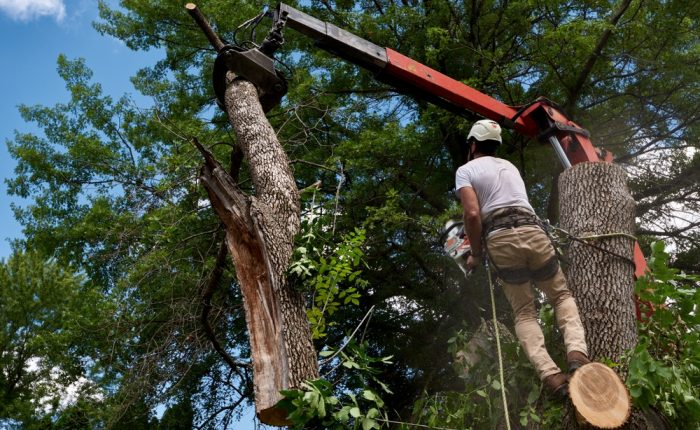
Removing a tree in a tight residential area like Bristol Borough requires specialized rigging, cranes, and safety gear to ensure the tree comes down in pieces, not in one dangerous crash. Partnering with a tree care professional can make sure everyone (and everything) remains safe as the tree is brought down.
Insurance & Liability
If a DIY removal goes wrong and a branch hits your neighbor’s roof, your standard homeowner’s insurance might not cover it if you were performing unprofessional work without a permit. In contrast, a licensed and insured tree service company carries the liability for you.
Cleanup That Protects Your Property
A quality crew leaves the area safer than they found it, clearing debris, grinding stumps if requested, and minimizing impact on lawns, sidewalks, and landscaping.
Remove Trees Properly & Safely in Bristol, PA
There’s a lot that goes into removing a tree. Between permits, municipal rules, HOA requirements, property line concerns, and utility right-of-way issues, it’s easy to see how a “quick removal” can turn into fines, neighbor disputes, and unsafe work.
The good news is that you don’t have to navigate the process alone. All The Above Tree Service helps homeowners through tree removal safely, from the initial assessment to the final cleanup. If you’re not sure whether you need a permit for tree removal, reach out to discuss your situation and schedule an on-site evaluation.