Key Signs a Tree Isn’t Structurally Sound
December 18, 2025
Many trees can look “fine” from the street with their full canopies, green leaves, and sturdy-looking trunks yet still have hidden weaknesses that make them more likely to fail in a storm.
A tree’s structure is a lot like a house’s framing: if something is compromised on the inside (or at key connection points), you might not notice until high winds or heavy rain put it to the test. The good news is that by knowing what to look for, you can protect your family, home, neighbors, and property, especially when the next storm rolls through.
Let’s take a moment to break down the most common red flags that suggest a tree may not be structurally sound.
What Structurally Sound Really Means for a Tree
When arborists talk about a tree being “structurally sound,” they’re not saying it’s perfect or that it will never lose a branch. They mean the tree’s overall shape, trunk, root system, and branch attachments are strong enough to handle normal stressors, like wind, rain, seasonal growth, and the weight of its own canopy.
More specifically, a structurally sound tree typically has:
- A stable, well-anchored root system that holds the tree upright and supports healthy growth.
- A trunk with solid wood (not hollowed, severely cracked, or decayed).
- Strong branch attachments (i.e., branches that connect to the trunk at healthy angles and have supportive collar tissue).
- Balanced weight distribution throughout the canopy, so the tree isn’t top-heavy or pulling hard to one side.
- Healthy growth patterns that don’t rely on weak, fast-growing shoots to replace lost limbs.
It’s important to note: a tree can be alive and still be structurally unsound. In fact, some risky trees look vibrant because they’re still leafing out while decay or internal defects quietly weaken them. That’s why paying attention to structure (not just greenery) matters so much.
How to Know Your Tree Is Structurally Unsound & Unsafe
Some warning signs of a structurally unsafe tree are obvious. Others are subtle and easy to miss until you’re standing by the tree after a storm thinking, “Wait… was that crack there before?”
Use the checklist below to understand if your tree is structurally unsound. (If you spot an issue, know that it doesn’t necessarily mean the tree is doomed. It does mean, however, it’s worth scheduling a tree health inspection.)
1. The Tree Developed a New or Suddenly More Severe Lean
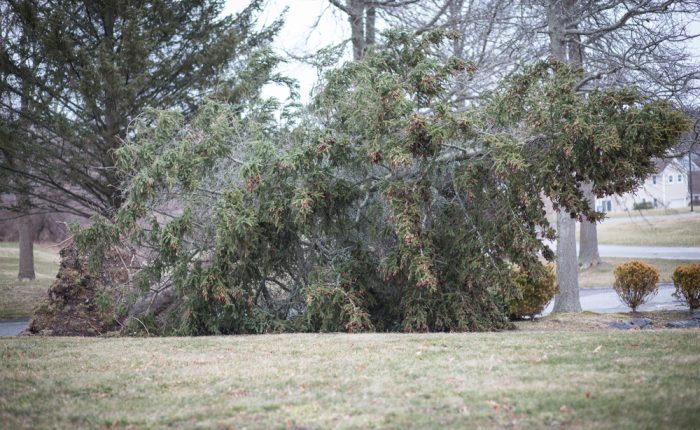
A slight lean that has been the same for years isn’t always a problem. In fact, some trees naturally grow at an angle to reach sunlight. But a new lean, a lean that’s getting worse, or a tree that appears to be lifting out of the ground can signal root failure.
Watch for:
- Soil that looks heaved or cracked near the base.
- Exposed roots that weren’t visible before.
- A tree that suddenly “looks closer” to your house or driveway than it used to.
After heavy rain, saturated soil can reduce root grip, and high winds can push the tree over. Since gravity is always at play, a leaning tree can fall at any moment, so do not ignore this sign of a structurally unsound tree. Instead, call a professional tree care company right away.
2. Cracks in the Trunk or Major Limbs
Cracks can form from storm damage, freeze-thaw cycles, lightning, previous limb failure, or internal decay. The problem is that cracks can act like fault lines — once they’re there, wind movement can widen them over time.
If your tree has deep vertical cracks running along the trunk or cracks where a large limb meets the trunk, get the tree evaluated by a certified arborist. Even if the tree is still leafed out, a crack can mean the wood fibers that provide strength have been compromised and may fail at any time.
3. Multiple Trunks With a Tight “V” Shape
Trees with two or more main stems (often called co-dominant leaders) can be more prone to splitting, especially when the stems form a tight “V.” That narrow angle can trap bark between the stems — called included bark — which prevents strong wood-to-wood bonding. These trees can sometimes be managed with proactive tree pruning or support systems, but they should be evaluated sooner rather than later.
4. Large Dead Limbs or a Lot of Dieback
Deadwood is one of the most common reasons homeowners call after a storm because those branches become flying hazards. If you have multiple dead branches, dieback at the canopy tips, or a tree that’s thinning out quickly, the tree may be suffering from stress, disease, or decay. Since these compromised tree limbs are especially dangerous over roofs, play areas, driveways, and property lines, it’s important to have the tree inspected and cared for by a certified arborist as soon as possible.
5. Mushrooms or Fungal Growth at the Base of the Tree
When you see mushrooms on or near a tree, they may be feeding on decaying wood. While not every fungus means “imminent failure,” fungal growth can be an important clue that internal rot is present. Decay in the lower trunk or root flare is especially concerning because that’s the tree’s support system.
6. Cavities, Hollowness, or “Soft” Spots
Hollows and cavities can form after branch loss, animal activity, past wounds, or decay. Some trees can survive with cavities for years, but structural strength depends on how much solid wood remains and where the defect is located. If the hollow is extensive — or located where the trunk needs maximum strength — storm failure becomes more likely. In many cases, it may be necessary to remove these trees to keep your property and family safe.
7. Root Problems: Girdling Roots, Damage, or Soil Changes
Roots are out of sight, so they’re easy to forget — until the tree comes down, that is. Construction, trenching, driveway work, and even repeated mower damage can compromise roots. Girdling roots (roots that wrap around the trunk) can also slowly choke off support and nutrient flow. Make sure you have your tree routinely inspected from root to canopy to catch these issues early.
8. Your Tree Has Been Topped
If a tree has been topped (cut flat across the top to reduce height), it often responds by sending up fast-growing shoots. Those shoots may look leafy and full, but they’re typically weakly attached and more likely to snap in storms. Corrective pruning can sometimes reduce risk, but topped trees deserve professional eyes.
Get Peace of Mind With a Professional Tree Inspection
If you’ve noticed any warning signs that your tree is structurally unsound, it’s smart to take action before the next big storm puts your property at risk. All The Above Tree Service can inspect your trees, identify structural weaknesses, and recommend the safest next steps, whether that’s targeted pruning or removal when necessary.
When it comes to tree safety, early intervention is usually easier, safer, and more cost-effective than emergency cleanup. Reach out to All The Above Tree Service if you’ve spotted leaning, cracking, or anything that just doesn’t look right. We’re here to help you protect your home, your family, and the space you love.