Why You Should Remove Hanging Tree Limbs After a Storm
December 6, 2025
After a night of listening to the relentless rhythm of heavy rain against the glass of your windows and the unsettling howl of high winds rattling the shutters, you step outside with a cup of coffee, breathing in that crisp, post-storm air, ready to survey the yard for fallen twigs or scattered debris.
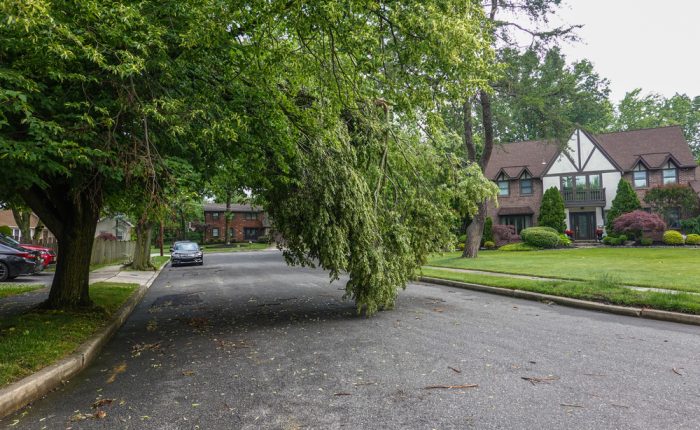
But as you glance up, your heart sinks. Dangling by a few jagged fibers of wood and swaying precariously over the pavement is a large tree limb from one of the trees on your property. In the tree care industry, we have a grim name for these broken branches: widow-makers.
Hanging limbs are among the most dangerous hazards a homeowner can face because they are entirely unpredictable. They don’t need another storm to fall; gravity, a slight shift in the breeze, or the simple progression of internal cracking can bring them crashing down days or even weeks after the clouds have cleared. Therefore, quick removal protects your family, your pets, and your property. It can also save the tree itself, preventing pests and decay from turning a minor injury into a fatal condition.
Below, we’ll walk you through why these limbs break in the first place, the specific risks they pose, and exactly what you should do if you discover a hanging tree limb.
What Causes Tree Limbs to Break During Storms?
It often feels like trees should be indestructible, but they are living organisms subject to the laws of physics. Because of this, during a storm, several factors can converge and push a tree’s structural integrity to its limit.
The most common reasons tree branches break during storms include:
1. Wind Leverage and the Sail Effect
When high winds hit a dense crown, the tree canopy acts like a giant sail, catching the wind and exerting immense force on individual limbs. If the wind is gusty or changes direction rapidly, it creates a whiplash effect, and branches that have structural defects, such as included bark (where two stems grow too close together, creating a weak attachment point), are often the first to snap under this pressure.
2. Heavy Precipitation and Ice
Rain adds significant weight to foliage, and a single large limb can hold hundreds of pounds of extra water weight during a downpour. If that rain turns to ice or heavy, wet snow, the weight increases exponentially. This static load can cause a limb to bow until it reaches its breaking point, often resulting in a partial snap where the limb hangs caught in the lower branches.
3. Pre-Existing Internal Decay
Often, a storm simply reveals what was already happening inside the tree. For example, fungi, boring beetles, or old wounds can hollow out a branch from the inside out. To the naked eye, the limb looks healthy and green, but the structural “pipe” of the wood is compromised. When the wind picks up, these hollowed-out sections fail, leading to a dangerously hanging tree limb.
4. Previous Storm Damage That Never Got Addressed
A branch that partially cracked in a past storm may still be holding on, until the next heavy weather event finishes the job. That’s one reason widow-makers can appear even after what seems like only a minor storm.
The Biggest Risks of Hanging Tree Limbs
It is tempting to look at a hanging limb and think, “It survived the worst of the wind; it’ll probably stay up there until I have time to deal with it next month.” This is a dangerous misconception. Take a closer look at why hanging limbs are a high-priority emergency:
Serious Risk of Personal Injury
The most obvious risk is also the most important: people can get hurt. Even a medium-sized limb can cause major injury if it falls from a great height. And because hanging limbs are unstable and gravity is always at play, you can’t predict when they’ll drop. Compromised branches can fall on a perfectly sunny, windless day when you are walking the dog or the kids are playing underneath the tree. So, please address the hanging tree limb as soon as the worst of the storm has passed!
Damage to Cars, Driveways, Patios, and Play Areas
Driveways and walkways are common targets for falling tree limbs because they’re often right beside mature trees. Of course, they are not the only part of your property that can be affected. A falling branch can crush a vehicle, dent car hoods, crack windshields, damage pavers and concrete, collapse fences and play structures, and take out power lines.
Roof and Gutter Damage
Limbs don’t have to be massive to cause expensive problems. A falling branch can tear gutters off, puncture shingles, damage fascia, and create hidden leaks.
Chain-Reaction Breakage
When one limb breaks and shifts weight suddenly, other branches can crack, too. Sometimes, the “second fall” happens later, after the storm, when the tree continues settling.
How Hanging Limb Removal Can Help the Tree Recover
When a limb snaps during a storm, it leaves behind a ragged wound that can be susceptible to infection or pest infestations. Removing the broken tree limb, therefore, isn’t just for your safety; it’s also for the tree’s health.
1. Clean Cuts Promote Healing
A jagged, torn break from a storm is nearly impossible for a tree to seal properly. By having a professional remove the hanging limb and make a clean, anatomical cut at the branch collar, you allow the tree to effectively wall off the damage.
2. Preventing Pest Infestations
Insects like boring beetles are attracted to the pheromones released by stressed and damaged wood. For this reason, a hanging limb with exposed internal wood is an open invitation for pests. Once they enter the break point, they can travel down into the main trunk, eventually killing the entire tree.
3. Stopping the Spread of Decay
A jagged break collects water. That standing water, combined with exposed wood, creates the perfect breeding ground for fungi and wood rot. If the hanging limb isn’t removed properly, the rot can spread deep into the heartwood of the tree, compromising its entire structural stability for years to come.
4. Preserving the Tree’s Structure
Branches broken in storms can throw a canopy out of balance. By removing the damaged limbs strategically — and potentially reducing weight in stressed areas — you can help prevent future failures and support healthier regrowth.
What Homeowners Should Do Immediately After a Storm
After a storm, it’s normal to want to get outside and start cleaning up right away. But when trees are involved, a little caution goes a long way. Here’s how to safely manage storm-damage cleanup and hanging limbs after a storm:
- Do a Visual Check From a Distance: Do not walk under trees potentially damaged in the storm. Instead, scan the canopy from a safe spot. Look for limbs hanging at odd angles, cracks where branches meet the trunk, splits in larger leaders, and branches resting on roofs, wires, fences, or other branches. If something looks “off,” treat it like it could move or fall.
- Keep People and Pets Away From the Danger Zone: If a limb is hanging over a driveway or play area, block it off. Move cars if you can do so safely. Keep kids and pets inside until it’s addressed.
- Stay Off Your Ladder: Never, under any circumstances, climb a ladder to prune a storm-damaged limb. The vibration of a saw or even your weight on the tree can trigger the limb to fall, taking you with it.
- Do Not Attempt to Pull the Tree Limb Down: Never try to pull a hanging limb down with a rope tied to your truck or by hitting it with a long pole. You cannot control the trajectory of a falling limb, and you risk pulling the entire tree over or having the limb swing back toward you.
- Take Photos for Insurance Purposes: If the limb has already caused some damage to your roof or fence, take photos from a safe distance. This will be helpful for any insurance claims you may need to file.
- Call a Professional Tree Care Company: High-risk limb removal requires specialized rigging equipment to ensure the branch is lowered safely to the ground without causing further damage. So, if you suspect a tree branch has been compromised in a recent storm, call All The Above Tree Service in Bucks County, PA, right away.
Why Professional Tree Limb Removal Is Non-Negotiable
Removing hanging limbs is a complicated task that requires a specific set of skills and equipment. That’s why it pays to hire a professional tree company.
At All The Above Tree Service, we use advanced rigging systems — pulleys, high-strength ropes, and friction devices — to secure the hanging limb before a single cut is made. This allows us to control the limb’s descent, ensuring it doesn’t swing into your home or crush your landscaping. We also have bucket trucks and aerial lifts to reach limbs in positions where climbing is too dangerous due to the instability of the tree.
Most importantly, when you hire a professional service like ours, you are completely protected. We carry comprehensive liability insurance and workers’ compensation, so that in the unlikely event of an accident, the homeowner is not held responsible.
Get Help With a Hanging Tree Limb Today
If you’ve discovered a broken or hanging limb on your property, don’t wait to see what happens next. Call the certified arborists at All The Above Tree Service for prompt, professional, and safe storm-damage cleanup. We have the expertise, the equipment, and the dedication to restore safety to your yard and health to your trees.
Contact us today for a professional assessment and prompt tree pruning services. We can also provide other solutions that help save your storm-damaged tree!